
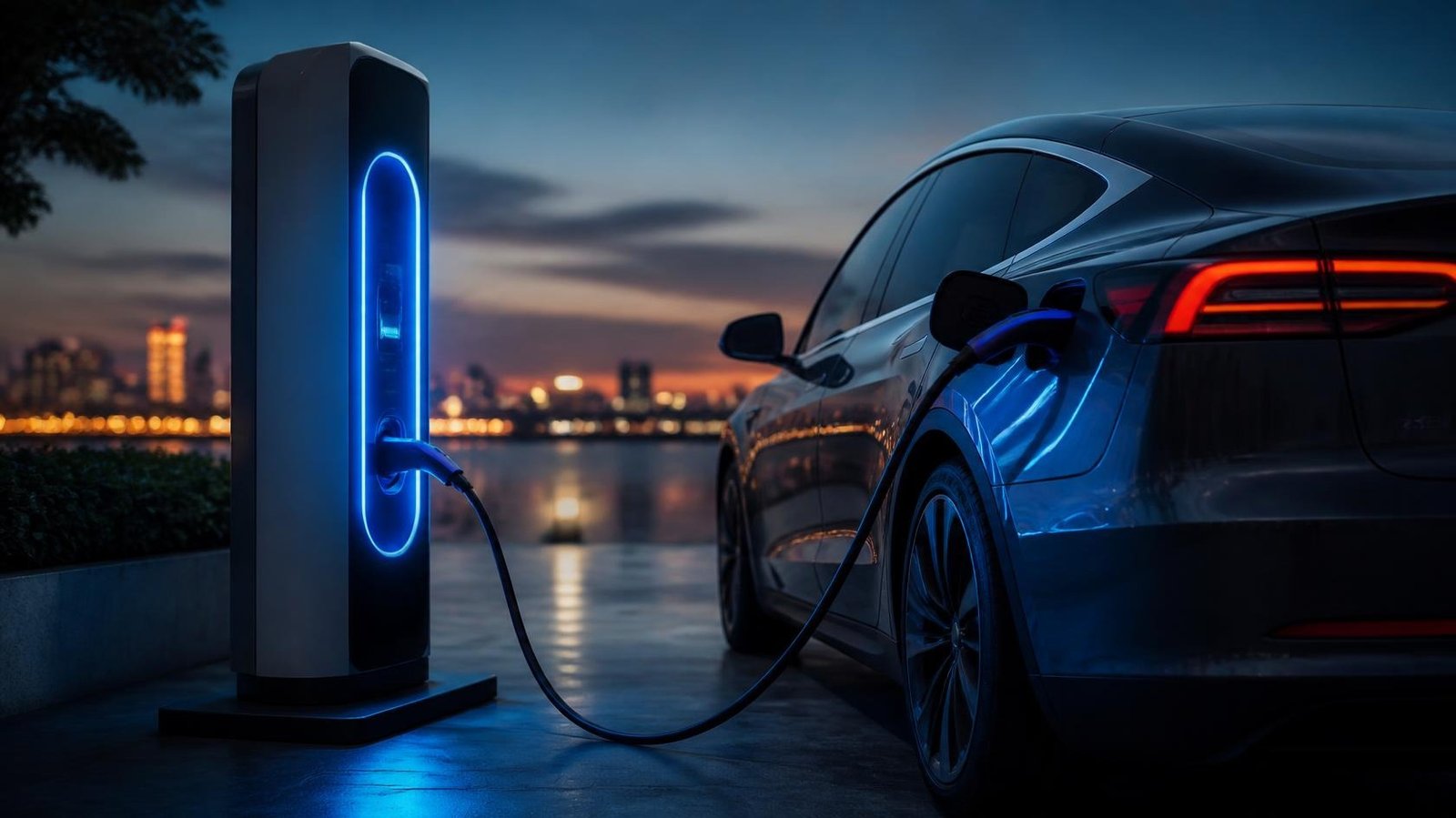
Charging an electric car is not a single experience — it changes depending on where you plug in and how much time you have. Some setups refill a battery overnight without any effort, while others deliver a meaningful boost in the time it takes to drink a coffee. Understanding the difference removes most of the confusion new owners face.
Why Charging Speed Keeps Changing
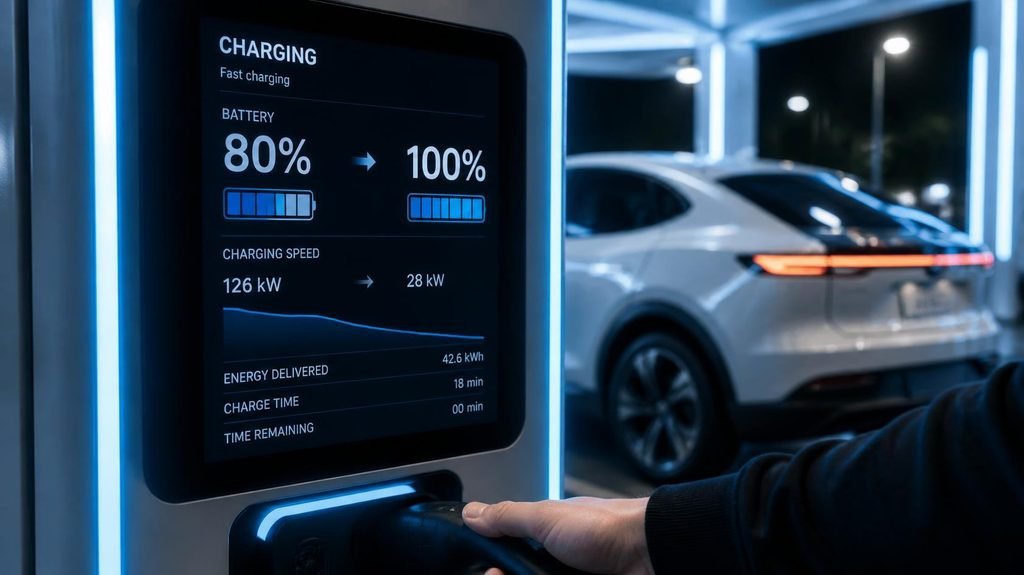
Many people expect an EV to charge at one steady rate from start to finish. That is not how batteries behave. Power flows in fastest when the pack is nearly empty, then tapers off as it fills. This slowdown is deliberate. It shields the cells from heat and stress, which helps the battery last for years.
Because of this taper, the final stretch of any charging session always feels slower than the beginning. Once you accept that, planning around it becomes straightforward.
Level 1: Plugging Into a Normal Wall Socket
Level 1 needs nothing more than a standard household outlet. There is no wiring work, no electrician, and no added expense. The downside is patience. You gain only a handful of miles per hour, so an overnight session might return somewhere between 30 and 50 miles of range.
Who does this suit? Drivers with short daily trips, plug-in hybrid owners, and anyone who simply wants a safety net at home. For a long commute, it is not enough on its own. As a backup, it is genuinely useful.
Level 2: The Setup Most Owners Choose
Level 2 draws on a 240-volt supply, the same kind that runs an electric oven. You will need an electrician to install the hardware, but the improvement is worth it. Depending on your vehicle and the unit itself, you can add roughly 15 to 35 miles of range every hour.
That translates to a complete charge in four to ten hours. Since most people sleep for at least that long, Level 2 fits neatly into an ordinary night. Workplaces, hotels, and retail car parks favour this option too, because it delivers solid speed without demanding heavy infrastructure.
DC Fast Charging: For Long Journeys
DC fast charging works differently. Instead of relying on the car’s built-in charger, it feeds power straight into the battery at high voltage. The result is a rapid top-up. Half an hour at a capable station can add around 100 miles, and most vehicles hit 80 percent in roughly that window.
You will find these stations along motorways and major travel routes. They are not meant for everyday use, since frequent rapid charging puts extra strain on a battery. But for a road trip, they turn a long journey into something entirely manageable.
The 80 Percent Habit
Almost every EV slows sharply once it passes 80 percent. Pushing beyond that point can double your total waiting time, and repeating the habit regularly may shorten battery life. Day-to-day driving rarely demands more than that level. Reserve a full charge for the mornings when you genuinely need every mile.
What Slows You Down in Real Life
Several things affect how long you actually wait. Battery size is the biggest factor, since a larger pack takes longer to fill at any given rate. Vehicle design matters too, because older 400-volt systems cannot match the charging speeds of newer 800-volt platforms. Weather plays a part as well, as cold batteries accept power slowly, which is why many EVs now warm themselves up before reaching a fast charger. Shared power at busy public stations can also reduce your rate when several cars plug in together.
Final Thoughts
Electric car charging is really about matching the right option to the right moment. Overnight Level 2 charging covers everyday driving without fuss. DC fast charging handles long distances with short, comfortable breaks. Level 1 stays useful as a fallback. Once these three are clear in your mind, range anxiety tends to disappear — and charging becomes just another part of the routine.
1 thought on “Electric Car Charging: Realistic Times for Every Charger Type”