
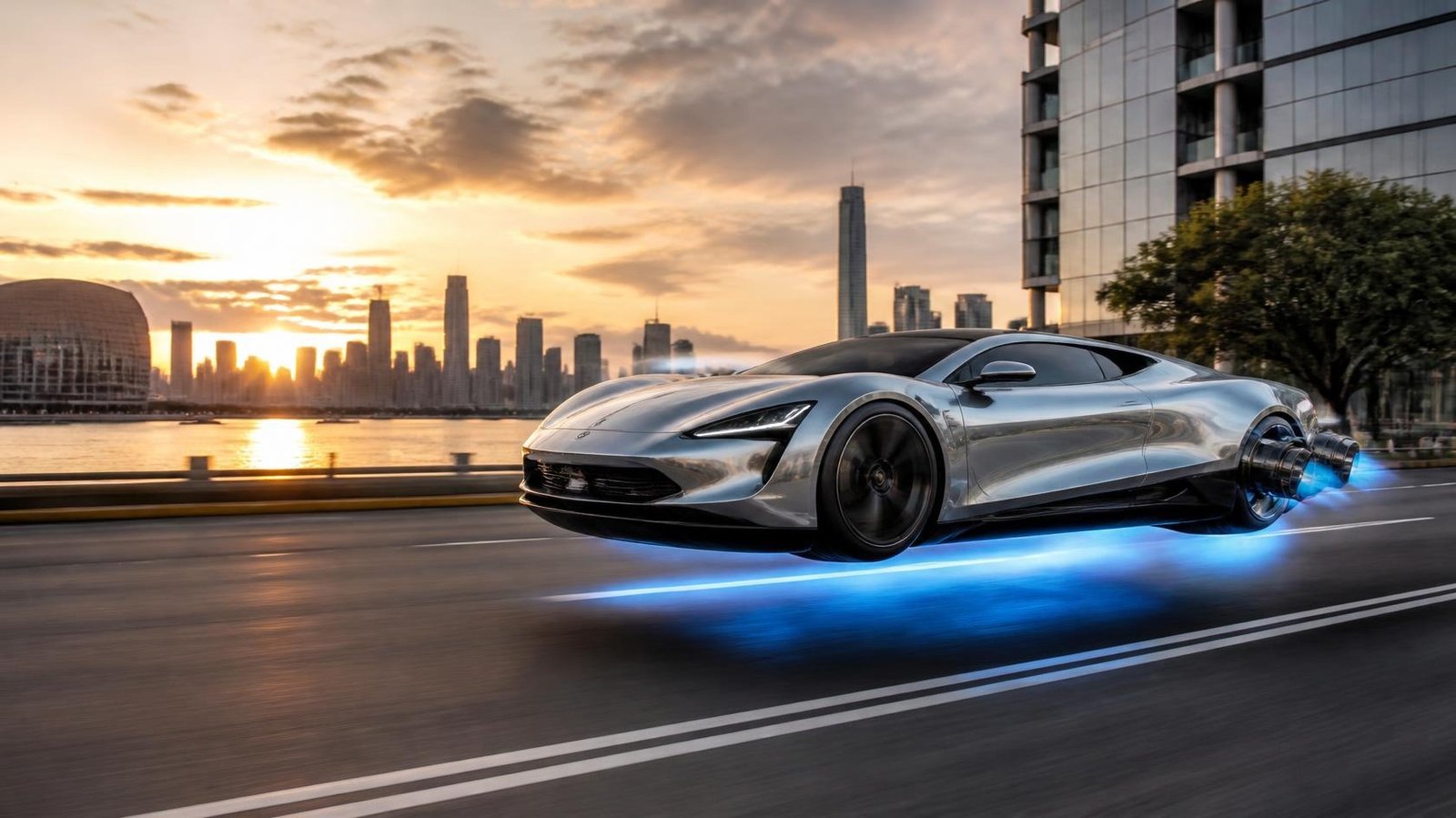
The idea of flying cars has fascinated people for decades, but recent developments are bringing this futuristic technology closer to reality. In October 2026, Tesla unveiled its redesigned Roadster with SpaceX-inspired thrusters, attracting attention from electric vehicle fans around the world. The demonstration showed the vehicle performing unusual aerial movements, raising an important question: Is the new Tesla flying car electric?
Yes, the Tesla Roadster is an electric sports car, and its special Rocket version is designed to use thrusters for brief airborne manoeuvres. However, it is not yet a commercially available flying car, and consumer production is planned for 2028, although the final delivery timeline remains uncertain. Read the latest coverage of the Tesla Roadster.
1. What Is the New Tesla Flying Car?
The new Tesla Roadster is a high-performance electric sports car developed by Tesla, with aerospace technology associated with SpaceX. Tesla first announced its next-generation Roadster in 2017, but the redesigned vehicle has now attracted renewed attention because of its unusual flight demonstration.
During the October 2026 unveiling, the vehicle demonstrated how thrusters could lift it briefly into the air and help it perform aerial movements. Its futuristic design combines electric vehicle technology with features inspired by rocket engineering.
Unlike a traditional aircraft, the Roadster is designed primarily as a sports car. Its flight-related capabilities are planned for a special version rather than every model.
2. Is the Tesla Flying Car 100% Electric?
Yes, the Roadster is an electric vehicle. Instead of relying on a conventional petrol engine, its driving system uses electric power.
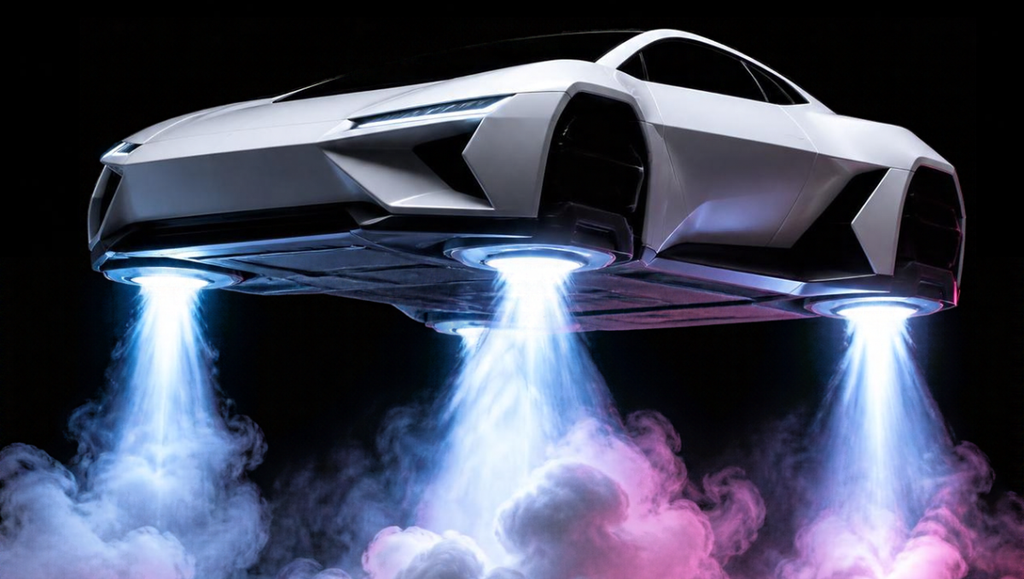
The important difference is how the flying version works. Its Rocket configuration is designed to combine the car’s electric technology with cold-gas thrusters. These thrusters release compressed gas to generate force, helping the vehicle make brief aerial movements.
Therefore, it is more accurate to describe the Roadster as an electric sports car with experimental flight capabilities than as a conventional electric aircraft.
If you want to understand the technology behind electric vehicles, read our internal guide: How Do Electric Cars Work?.
3. How Does the Flying Technology Work?
Traditional cars remain on the ground because their wheels provide traction on the road. Aircraft, meanwhile, use wings and propulsion systems to generate the forces needed for flight.
Tesla’s proposed Rocket version takes a different approach. It is designed to use cold-gas thrusters that release compressed gas to produce thrust. The vehicle also incorporates a specialised suction system intended to generate downforce, helping it remain attached to a surface during certain manoeuvres.
During the unveiling, the demonstration showed the vehicle leaving the ground briefly and performing aerial movements.
However, a short demonstration is not the same as sustained flight. The vehicle’s practical flight range, flight duration, operational limitations and real-world safety requirements remain important questions.
4. What Are the Expected Performance and Features?
Tesla has promoted the Roadster as a high-performance electric sports car. The redesigned model is intended to combine rapid acceleration, advanced aerodynamics and specialised propulsion technology.
Its expected highlights include:
- An electric powertrain for road driving.
- A lightweight sports-car design.
- Advanced aerodynamic features.
- Cold-gas thrusters on the special Rocket version.
- Brief flight capabilities planned for that version.
- A technology package developed with SpaceX-related engineering.
These features make the vehicle different from ordinary electric cars. However, announced specifications and demonstrations should not be confused with independently verified performance in everyday conditions.
5. When Will the Tesla Flying Car Be Available?
Tesla expects to begin manufacturing its updated Roadster in 2028. That means buyers should not expect the flying version to become a normal showroom vehicle immediately after its unveiling.
The Rocket configuration is described as invitation-only, and Tesla’s website states that it is not approved for public road use. Buyers should review the latest official terms and regulatory information before making any reservation or payment.
Availability, pricing, production schedules and final specifications can change as development continues.
For readers comparing electric vehicles that are more practical today, explore our guide to affordable electric cars in Pakistan.
6. Could Flying Electric Cars Change Transportation?
Flying cars could eventually offer new ways to travel, particularly where road congestion creates serious delays. However, making them practical requires much more than developing a vehicle that can lift off the ground.
Manufacturers must address safety, flight permissions, training, suitable landing areas, maintenance and operating costs. Electric propulsion also faces limitations involving battery weight and available energy, while compressed-gas systems introduce their own technical challenges.
For these reasons, flying cars are unlikely to replace ordinary electric cars in the near future. They may instead become a specialised transportation option if manufacturers can demonstrate that they are safe, reliable and affordable.
7. Is the Tesla Flying Car Worth Waiting For?
The new Roadster is an exciting development for people who follow electric vehicles and aerospace technology. Its combination of electric driving and proposed flight capabilities shows how manufacturers are experimenting with new vehicle designs.
Nevertheless, the flying version is not yet a practical purchase for everyday commuting. Its planned production timeline, limited availability and regulatory challenges mean that interested buyers should wait for more evidence about its final capabilities.
For most drivers, conventional electric cars remain the more realistic choice because charging infrastructure, ownership costs and everyday usability are already better understood.
Final Thoughts
The new Tesla Roadster answers the question of whether an electric sports car can incorporate flying technology: Tesla has demonstrated a prototype with brief aerial capabilities and plans a special Rocket version.
But there is an important distinction between a dramatic demonstration and a fully approved, commercially available flying vehicle. Production is planned for 2028, and the vehicle’s final capabilities and regulatory status will determine how useful it becomes.
As electric mobility continues to develop, MyEVCarGuide will help readers follow the latest EV technology, understand how electric vehicles work and compare options for the future.